
FILM DIRECTOR
Vera Chytilová
Beatrice Eggleston
The magic of the medium of film lies in its orchestration of different art forms to fill in the gaps that individual forms cannot. The artist is able to virtually project to the world what she sees in her mind. Her creative vision is not contingent on the reader's interpretation of words, not limited to colours or textures, not bound by the capacities of her musical instrument.
By creating a symphonic collage that commands the visual, narrative and aural, the filmmaker comes to as complete a replication of her inner world as is possible. Czech director Věra Chytilová exploits the ingredients of filmmaking like no other. While working on her magnum opus, Sedmikrásky ("Daisies") of 1966, she wanted "to explore the utmost limits of the possibilities of the filmic language." And this she did.
Daisies' subversiveness interrogates the status quo of cinema not only through its stylistic free-spiritedness - colour filters and fragmented editing that render the film something between a creatively told story and a psychedelic collage - but also through its controversial ridicule of contemporary society. Chytilová satiates the human appetite for impulse and our boredom with obedience.
The girls of Daisies gleefully and unabashedly destroy material symbols through conspicuous consumption and by mocking adherents to the system. They frolic through their world in a manner reminiscent of Astrid Lindgren's Pippi Longstocking, with an air of anarchic mischief and harmless debauchery.
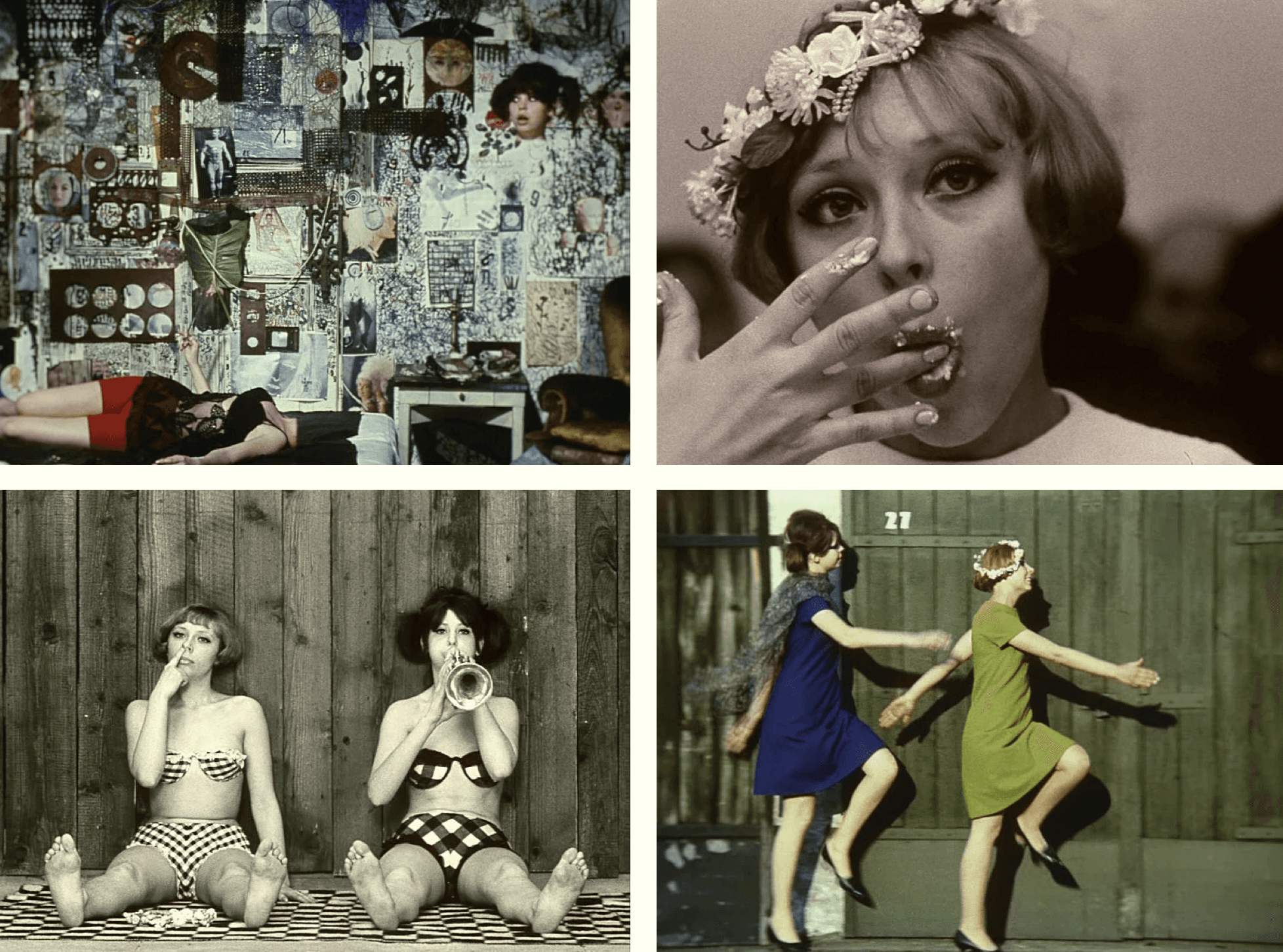
"An air of anarchic mischief and harmless debauchery."
After its release, as if in response to the dedication in the film's closing sequence - "to those who get upset only over a trodden-upon bed of lettuce" - Daisies was banned first by Czechoslovak authorities on the basis of its depiction of food waste, and later by the Soviet authorities for its defiance of socialist realism's criteria for art. Chytilová was subsequently banned from making films for over six years.
She returned to directing after an open apology letter to the authorities lifted her ban, an action that some saw as a submission to repression. Yet Chytilová retained her distinctive style in her future works: a marriage of intellectual commentary and an intuitive sensitivity to art and beauty. In Sedmikrásky, that marriage produced one of cinema’s boldest demonstrations of what the filmic medium can do when pushed to its limits.
FILM DIRECTOR
Vera Chytilová
Beatrice Eggleston
The magic of the medium of film lies in its orchestration of different art forms to fill in the gaps that individual forms cannot. The artist is able to virtually project to the world what she sees in her mind. Her creative vision is not contingent on the reader's interpretation of words, not limited to colours or textures, not bound by the capacities of her musical instrument.
By creating a symphonic collage that commands the visual, narrative and aural, the filmmaker comes to as complete a replication of her inner world as is possible. Czech director Věra Chytilová exploits the ingredients of filmmaking like no other. While working on her magnum opus, Sedmikrásky ("Daisies") of 1966, she wanted "to explore the utmost limits of the possibilities of the filmic language." And this she did.
Daisies' subversiveness interrogates the status quo of cinema not only through its stylistic free-spiritedness - colour filters and fragmented editing that render the film something between a creatively told story and a psychedelic collage - but also through its controversial ridicule of contemporary society. Chytilová satiates the human appetite for impulse and our boredom with obedience.
The girls of Daisies gleefully and unabashedly destroy material symbols through conspicuous consumption and by mocking adherents to the system. They frolic through their world in a manner reminiscent of Astrid Lindgren's Pippi Longstocking, with an air of anarchic mischief and harmless debauchery.
"An air of anarchic mischief and harmless debauchery."
After its release, as if in response to the dedication in the film's closing sequence - "to those who get upset only over a trodden-upon bed of lettuce" - Daisies was banned first by Czechoslovak authorities on the basis of its depiction of food waste, and later by the Soviet authorities for its defiance of socialist realism's criteria for art. Chytilová was subsequently banned from making films for over six years.
She returned to directing after an open apology letter to the authorities lifted her ban, an action that some saw as a submission to repression. Yet Chytilová retained her distinctive style in her future works: a marriage of intellectual commentary and an intuitive sensitivity to art and beauty. In Sedmikrásky, that marriage produced one of cinema’s boldest demonstrations of what the filmic medium can do when pushed to its limits.
FILM DIRECTOR
Vera Chytilová
Beatrice Eggleston
The magic of the medium of film lies in its orchestration of different art forms to fill in the gaps that individual forms cannot. The artist is able to virtually project to the world what she sees in her mind. Her creative vision is not contingent on the reader's interpretation of words, not limited to colours or textures, not bound by the capacities of her musical instrument.
By creating a symphonic collage that commands the visual, narrative and aural, the filmmaker comes to as complete a replication of her inner world as is possible. Czech director Věra Chytilová exploits the ingredients of filmmaking like no other. While working on her magnum opus, Sedmikrásky ("Daisies") of 1966, she wanted "to explore the utmost limits of the possibilities of the filmic language." And this she did.
Daisies' subversiveness interrogates the status quo of cinema not only through its stylistic free-spiritedness - colour filters and fragmented editing that render the film something between a creatively told story and a psychedelic collage - but also through its controversial ridicule of contemporary society. Chytilová satiates the human appetite for impulse and our boredom with obedience.
The girls of Daisies gleefully and unabashedly destroy material symbols through conspicuous consumption and by mocking adherents to the system. They frolic through their world in a manner reminiscent of Astrid Lindgren's Pippi Longstocking, with an air of anarchic mischief and harmless debauchery.
"An air of anarchic mischief and harmless debauchery."
After its release, as if in response to the dedication in the film's closing sequence - "to those who get upset only over a trodden-upon bed of lettuce" - Daisies was banned first by Czechoslovak authorities on the basis of its depiction of food waste, and later by the Soviet authorities for its defiance of socialist realism's criteria for art. Chytilová was subsequently banned from making films for over six years.
She returned to directing after an open apology letter to the authorities lifted her ban, an action that some saw as a submission to repression. Yet Chytilová retained her distinctive style in her future works: a marriage of intellectual commentary and an intuitive sensitivity to art and beauty. In Sedmikrásky, that marriage produced one of cinema’s boldest demonstrations of what the filmic medium can do when pushed to its limits.
Write a eulogy to something you love: contact@theneighborr.com
Write a eulogy to something you love:
contact@theneighborr.com