
SHORT STORY
Anatomy of a Laugh
Paul de Fressenel
The bistro was buzzing that night. The smell of roasted garlic was lazily drifting through the room. My elbows were pinned. I was wedged between strangers, guarding my glass like a fragile treasure, vividly aware that the slightest movement could send it shattering across the table. Opposite me, a man who I had just met smiled with a politician’s confidence. He introduced himself earlier with a large smile and a crushing handshake.
After exchanging ritual greetings and formalities, silence comfortably settled in, punctuated by the soft metallic tangle of forks and knives. His eyes were fixed elsewhere. After a thorough investigation, I understood that he was listening intently to the story unfolding at the next table. Naturally, I joined in and started eavesdropping too, surrendering to the quiet pull of my curiosity. After a moment, the improvised storyteller gained momentum. His hands were sketching shapes in the air and his words were swelling toward a climax. Suddenly, with an abrupt twist, he delivered the finale:
- "And that's how I got elected mayor by accident!"
Amused by this unexpected ending, I let out a quiet laugh through my nose and turned back to my table. I found my dinner companion looking at me. His head was slightly tilted and a half-smile had set camp in the corner of his mouth. It grinned at me with a devilish cheek as though I was about to witness something extraterrestrial.
Suddenly, he exploded into laughter. The sound was so loud and unguarded that the restaurant stopped moving for a beat. The waiter paused mid-step, a fork hung in the air, voices dissolving into unfinished murmurs. The laugh did not begin in his throat but somewhere deeper. His diaphragm, his stomach, or perhaps his very bones. His face seemed to break open. His body was curling inwards, his arms wrapped around his ribs to hold himself together. He was clearly overtaken by his own physicality, and was unable to summon a single command to stop it. This spectacle was as embarrassing as it was magnetic.
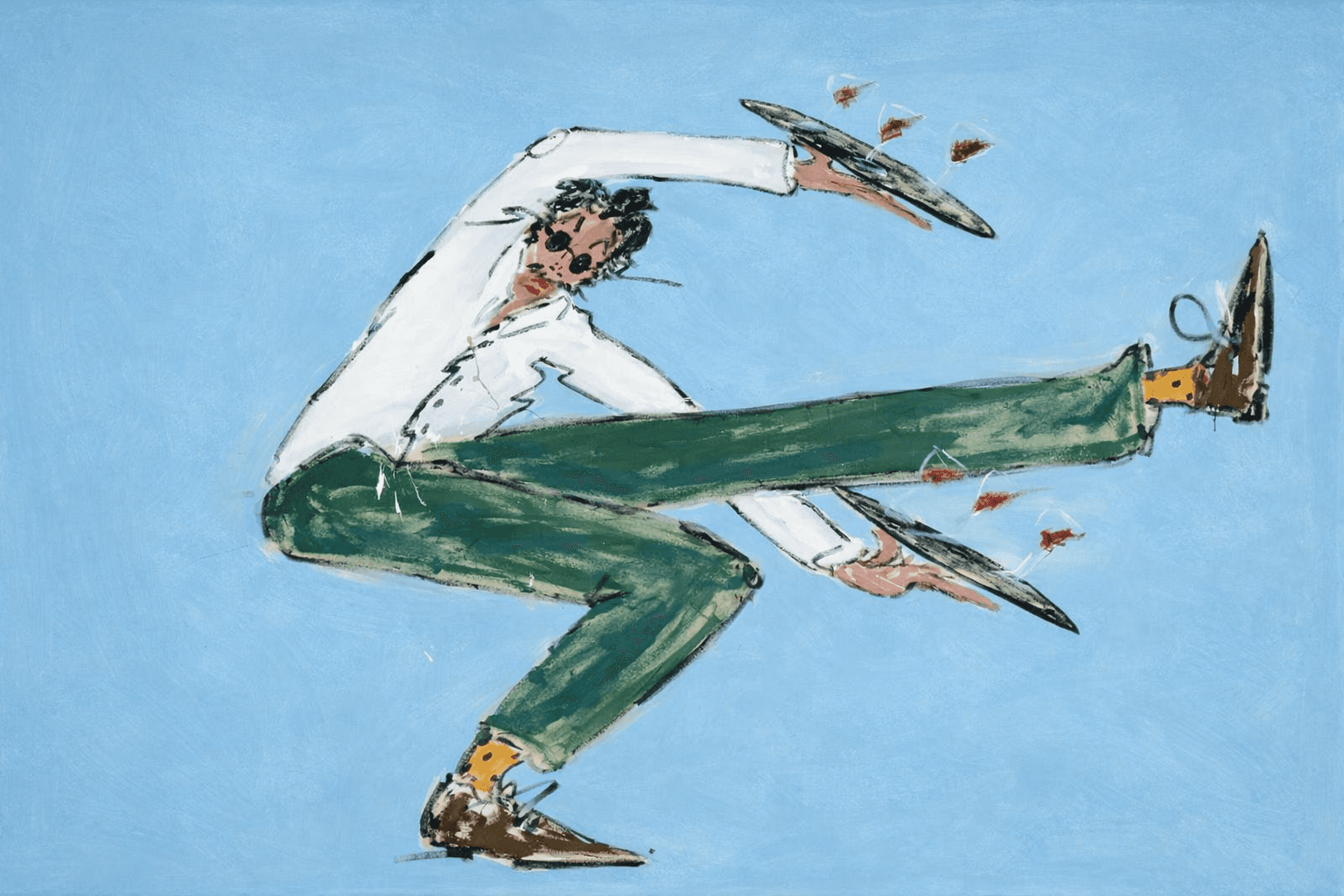
"The waiter paused mid-step, a fork hung in the air"
I watched, fascinated, this grown man surrendering completely to hilarity. His body had staged a revolt, declaring its independence and waving a flag that said “I answer to no one!”. The ghost of his laughter was still trembling on his lips. I had just witnessed a small miracle: the extraordinary orchestration of dozens of muscles, nerves, and reflexes rising in unity to dethrone the pre-frontal cortex, the seat of reason, and hold it captive to laughter’s will.
I thought back about my past experiences in human comedy. The small theatre of telling a joke. I always watched the specialists I knew with something of an anthropological fascination. Their toolbox was endless. Exaggeration. Parody. Irony, that sly smile of the intellect. Absurdity. Incongruity. Each one a variation of the same theme: Dissonance. They would walk into a conversation and immediately start gathering information: the room’s temperature, a distracted glance, a softening around the eyes… All key metrics for the precision of their craft. Then the careful calibration begins, stretching a sentence here, swallowing a syllable there, pausing at the right moment to deliver the impact. Sometimes they would abandon the original punchline entirely to pivot mid-sentence because of an unexpected opening.
They would orchestrate a controlled miniature crisis of logic, a controlled detonation of senses. What fascinated me the most was the moment of freefall after delivery. I could almost hear it. The room holding itself in suspension. Their cortisol levels augmenting. They seem to walk a tight rope between brilliance and failure, as evidenced by their face oscillating between doubt, confidence, and disarray. If they are successful, for a very small instant, they become the conductor and magician that controls something ephemeral and alive.
SHORT STORY
Anatomy of a Laugh
Paul de Fressenel
The bistro was buzzing that night. The smell of roasted garlic was lazily drifting through the room. My elbows were pinned. I was wedged between strangers, guarding my glass like a fragile treasure, vividly aware that the slightest movement could send it shattering across the table. Opposite me, a man who I had just met smiled with a politician’s confidence. He introduced himself earlier with a large smile and a crushing handshake.
After exchanging ritual greetings and formalities, silence comfortably settled in, punctuated by the soft metallic tangle of forks and knives. His eyes were fixed elsewhere. After a thorough investigation, I understood that he was listening intently to the story unfolding at the next table. Naturally, I joined in and started eavesdropping too, surrendering to the quiet pull of my curiosity. After a moment, the improvised storyteller gained momentum. His hands were sketching shapes in the air and his words were swelling toward a climax. Suddenly, with an abrupt twist, he delivered the finale:
- "And that's how I got elected mayor by accident!"
Amused by this unexpected ending, I let out a quiet laugh through my nose and turned back to my table. I found my dinner companion looking at me. His head was slightly tilted and a half-smile had set camp in the corner of his mouth. It grinned at me with a devilish cheek as though I was about to witness something extraterrestrial.
Suddenly, he exploded into laughter. The sound was so loud and unguarded that the restaurant stopped moving for a beat. The waiter paused mid-step, a fork hung in the air, voices dissolving into unfinished murmurs. The laugh did not begin in his throat but somewhere deeper. His diaphragm, his stomach, or perhaps his very bones. His face seemed to break open. His body was curling inwards, his arms wrapped around his ribs to hold himself together. He was clearly overtaken by his own physicality, and was unable to summon a single command to stop it. This spectacle was as embarrassing as it was magnetic.
"The waiter paused mid-step, a fork hung in the air"
I watched, fascinated, this grown man surrendering completely to hilarity. His body had staged a revolt, declaring its independence and waving a flag that said “I answer to no one!”. The ghost of his laughter was still trembling on his lips. I had just witnessed a small miracle: the extraordinary orchestration of dozens of muscles, nerves, and reflexes rising in unity to dethrone the pre-frontal cortex, the seat of reason, and hold it captive to laughter’s will.
I thought back about my past experiences in human comedy. The small theatre of telling a joke. I always watched the specialists I knew with something of an anthropological fascination. Their toolbox was endless. Exaggeration. Parody. Irony, that sly smile of the intellect. Absurdity. Incongruity. Each one a variation of the same theme: Dissonance. They would walk into a conversation and immediately start gathering information: the room’s temperature, a distracted glance, a softening around the eyes… All key metrics for the precision of their craft. Then the careful calibration begins, stretching a sentence here, swallowing a syllable there, pausing at the right moment to deliver the impact. Sometimes they would abandon the original punchline entirely to pivot mid-sentence because of an unexpected opening.
They would orchestrate a controlled miniature crisis of logic, a controlled detonation of senses. What fascinated me the most was the moment of freefall after delivery. I could almost hear it. The room holding itself in suspension. Their cortisol levels augmenting. They seem to walk a tight rope between brilliance and failure, as evidenced by their face oscillating between doubt, confidence, and disarray. If they are successful, for a very small instant, they become the conductor and magician that controls something ephemeral and alive.
SHORT STORY
Anatomy of a Laugh
Paul de Fressenel
The bistro was buzzing that night. The smell of roasted garlic was lazily drifting through the room. My elbows were pinned. I was wedged between strangers, guarding my glass like a fragile treasure, vividly aware that the slightest movement could send it shattering across the table. Opposite me, a man who I had just met smiled with a politician’s confidence. He introduced himself earlier with a large smile and a crushing handshake.
After exchanging ritual greetings and formalities, silence comfortably settled in, punctuated by the soft metallic tangle of forks and knives. His eyes were fixed elsewhere. After a thorough investigation, I understood that he was listening intently to the story unfolding at the next table. Naturally, I joined in and started eavesdropping too, surrendering to the quiet pull of my curiosity. After a moment, the improvised storyteller gained momentum. His hands were sketching shapes in the air and his words were swelling toward a climax. Suddenly, with an abrupt twist, he delivered the finale:
- "And that's how I got elected mayor by accident!"
Amused by this unexpected ending, I let out a quiet laugh through my nose and turned back to my table. I found my dinner companion looking at me. His head was slightly tilted and a half-smile had set camp in the corner of his mouth. It grinned at me with a devilish cheek as though I was about to witness something extraterrestrial.
Suddenly, he exploded into laughter. The sound was so loud and unguarded that the restaurant stopped moving for a beat. The waiter paused mid-step, a fork hung in the air, voices dissolving into unfinished murmurs. The laugh did not begin in his throat but somewhere deeper. His diaphragm, his stomach, or perhaps his very bones. His face seemed to break open. His body was curling inwards, his arms wrapped around his ribs to hold himself together. He was clearly overtaken by his own physicality, and was unable to summon a single command to stop it. This spectacle was as embarrassing as it was magnetic.
"The waiter paused mid-step, a fork hung in the air"
I watched, fascinated, this grown man surrendering completely to hilarity. His body had staged a revolt, declaring its independence and waving a flag that said “I answer to no one!”. The ghost of his laughter was still trembling on his lips. I had just witnessed a small miracle: the extraordinary orchestration of dozens of muscles, nerves, and reflexes rising in unity to dethrone the pre-frontal cortex, the seat of reason, and hold it captive to laughter’s will.
I thought back about my past experiences in human comedy. The small theatre of telling a joke. I always watched the specialists I knew with something of an anthropological fascination. Their toolbox was endless. Exaggeration. Parody. Irony, that sly smile of the intellect. Absurdity. Incongruity. Each one a variation of the same theme: Dissonance. They would walk into a conversation and immediately start gathering information: the room’s temperature, a distracted glance, a softening around the eyes… All key metrics for the precision of their craft. Then the careful calibration begins, stretching a sentence here, swallowing a syllable there, pausing at the right moment to deliver the impact. Sometimes they would abandon the original punchline entirely to pivot mid-sentence because of an unexpected opening.
They would orchestrate a controlled miniature crisis of logic, a controlled detonation of senses. What fascinated me the most was the moment of freefall after delivery. I could almost hear it. The room holding itself in suspension. Their cortisol levels augmenting. They seem to walk a tight rope between brilliance and failure, as evidenced by their face oscillating between doubt, confidence, and disarray. If they are successful, for a very small instant, they become the conductor and magician that controls something ephemeral and alive.
Write a eulogy to something you love: contact@theneighborr.com
Write a eulogy to something you love:
contact@theneighborr.com